
august 5 — august 29
reception : august 8, 4 — 6
Join us for a reception Saturday, August 8. All three artists will be in attendance and available for conversation — Tyler Swain traveling in from Utah, Loren DiBenedetto and Jane Jaskevich both North Carolina artists. Come meet them, walk through the work, and spend an evening with the artists and the people who care about what they make. Wines selected by Peabody's Wine & Beer Merchants, with a tasting pairing chosen for this exhibition. Hors d'oeuvres from the gallery and our friends.
All three work from the natural world. None of them leave it as they found it. Swain grew up in a Utah valley ringed by mountains, in a house where his mother kept flower beds; he renders a magnolia or a single insect with unreasonable precision and then sets it loose on a ground of pure invention — what he calls a balance between chaos and control. DiBenedetto arranged flowers in a New Jersey florist shop as a teenager, long before she arranged them on canvas : lemons, cherries, a bird's nest, a petal caught mid-fold, ordinary things held still long enough to turn strange. Jaskevich carves under a covered deck on two acres in Weaverville, within sight of the mountains and her neighbors' chickens, and works without a plan — she draws on the boulder, cuts away what isn't needed, and lets the stone decide the face.
Nature hands each of them a beginning and then stops. The rest is invention — three people finishing a sentence the world started.
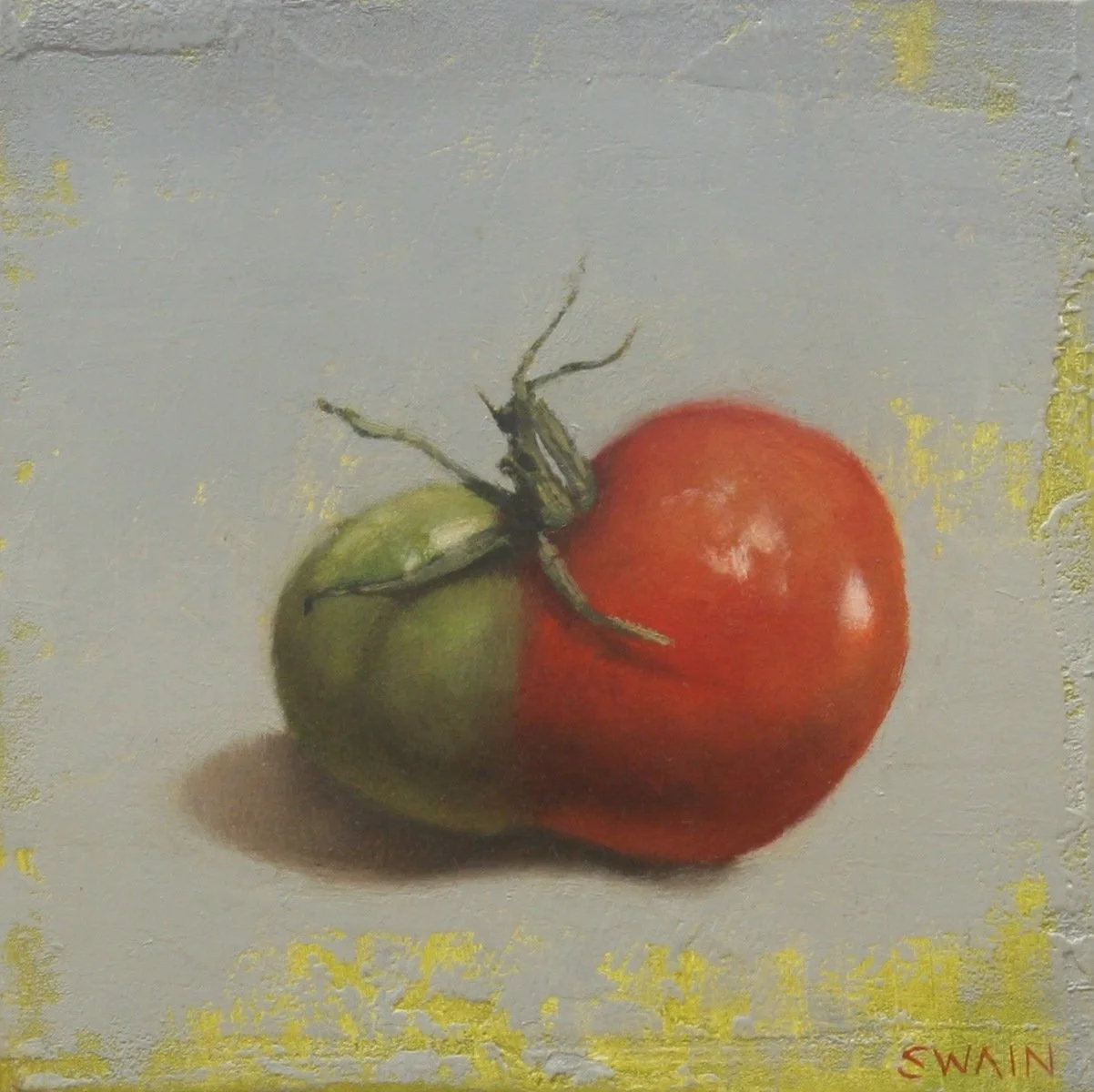
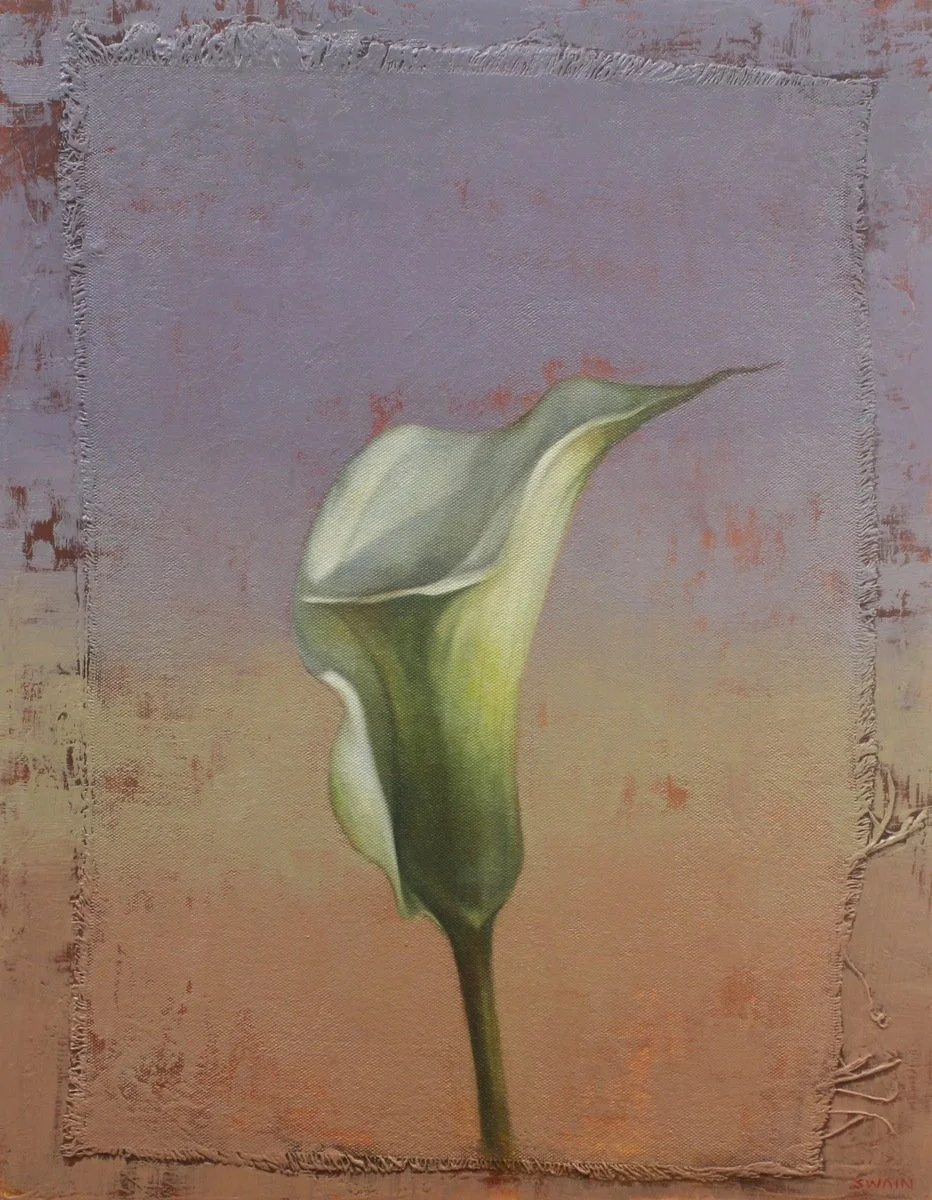
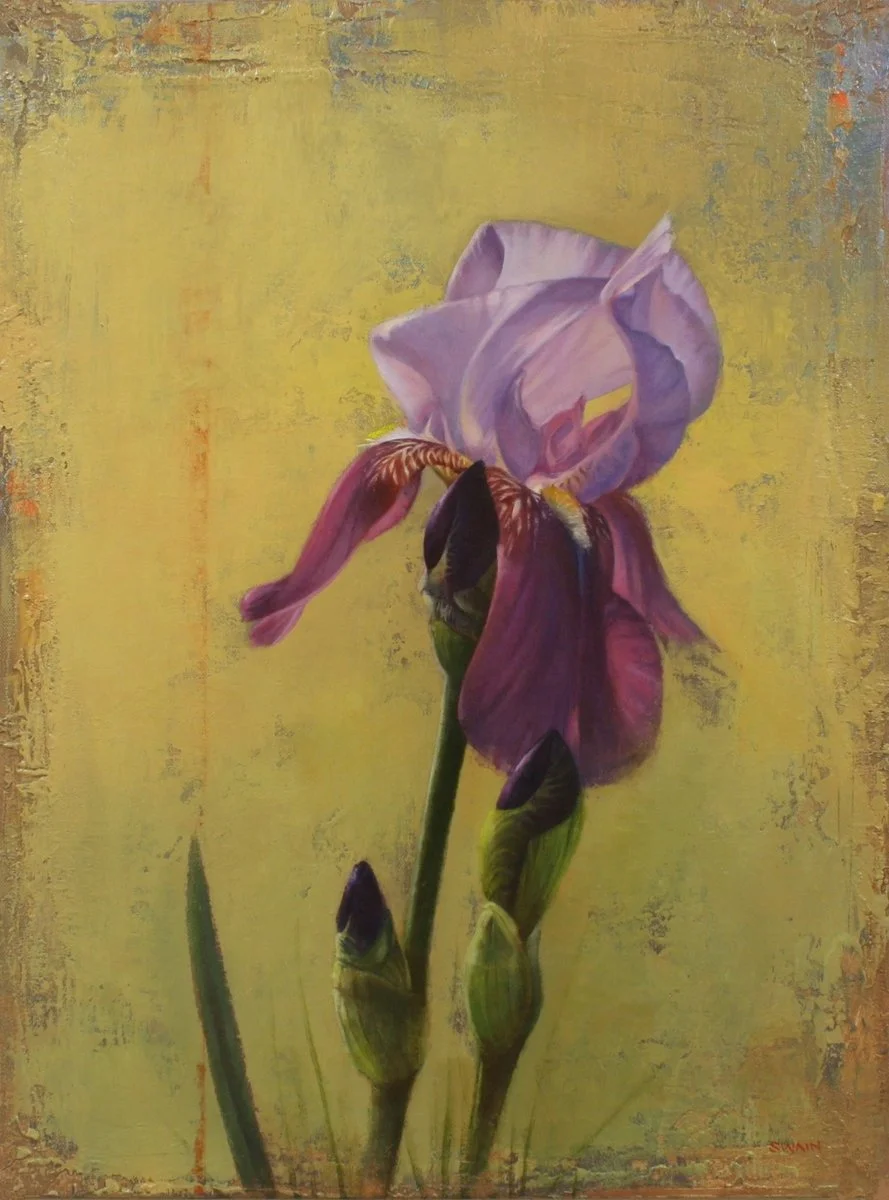
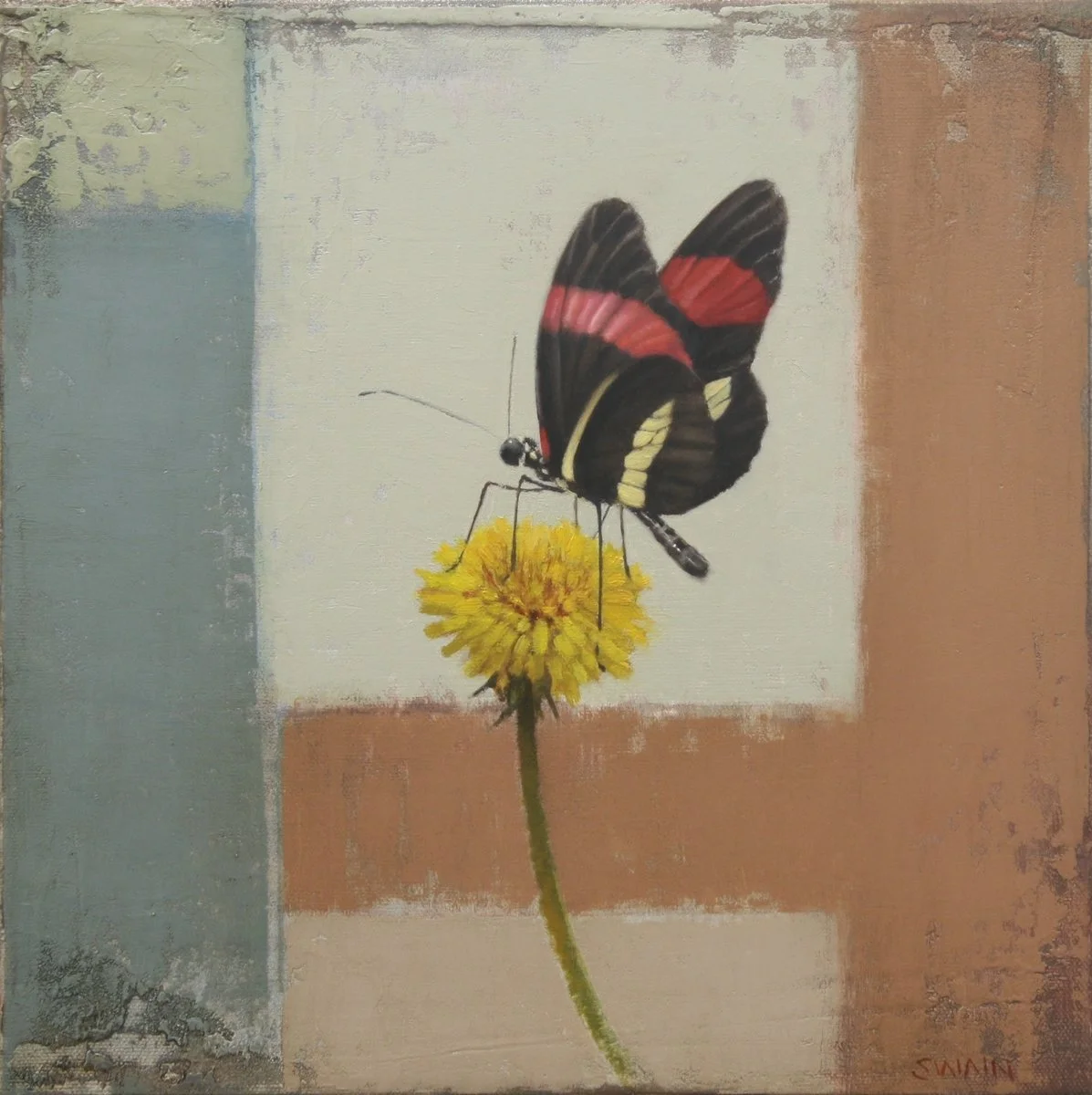
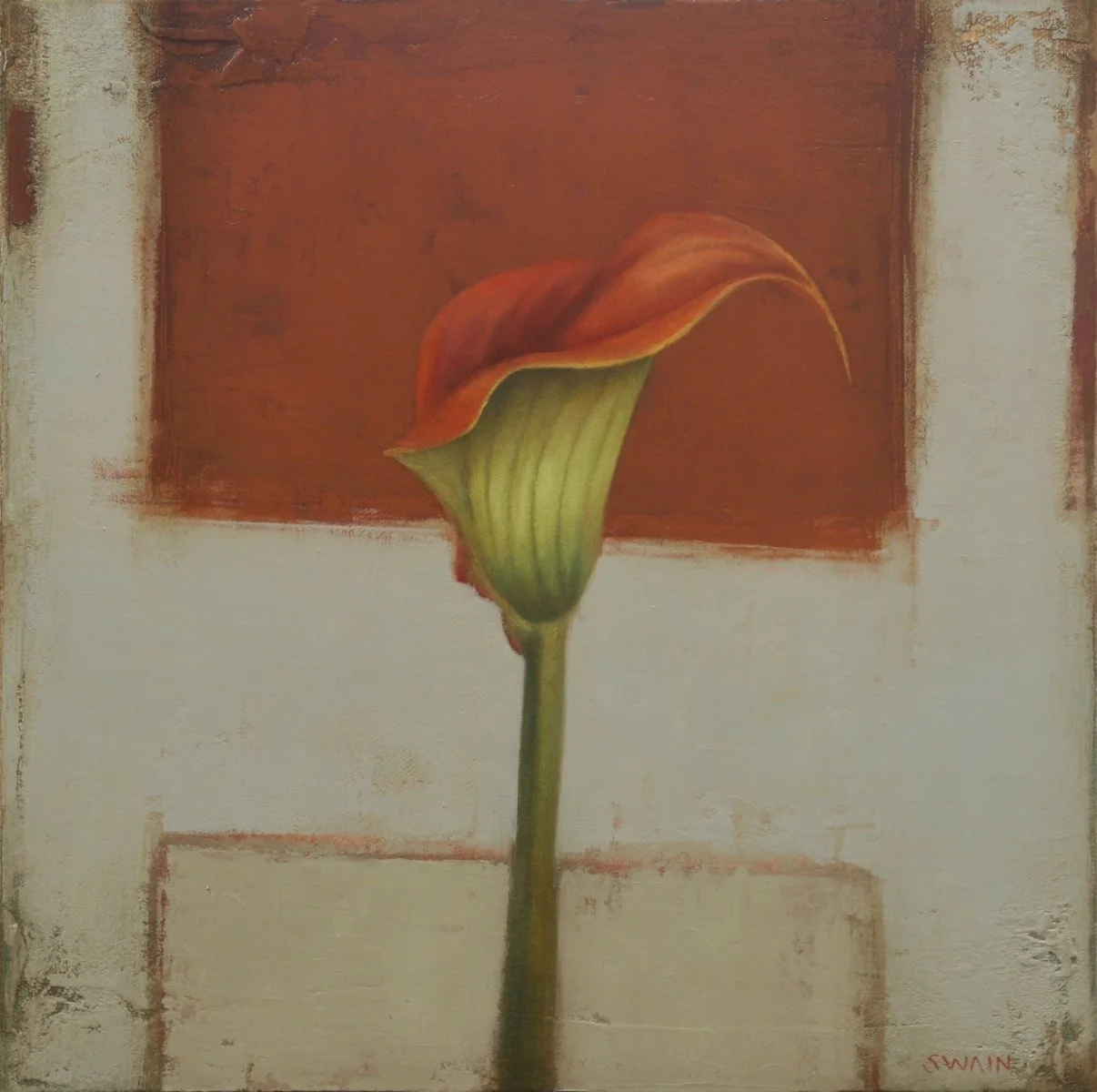
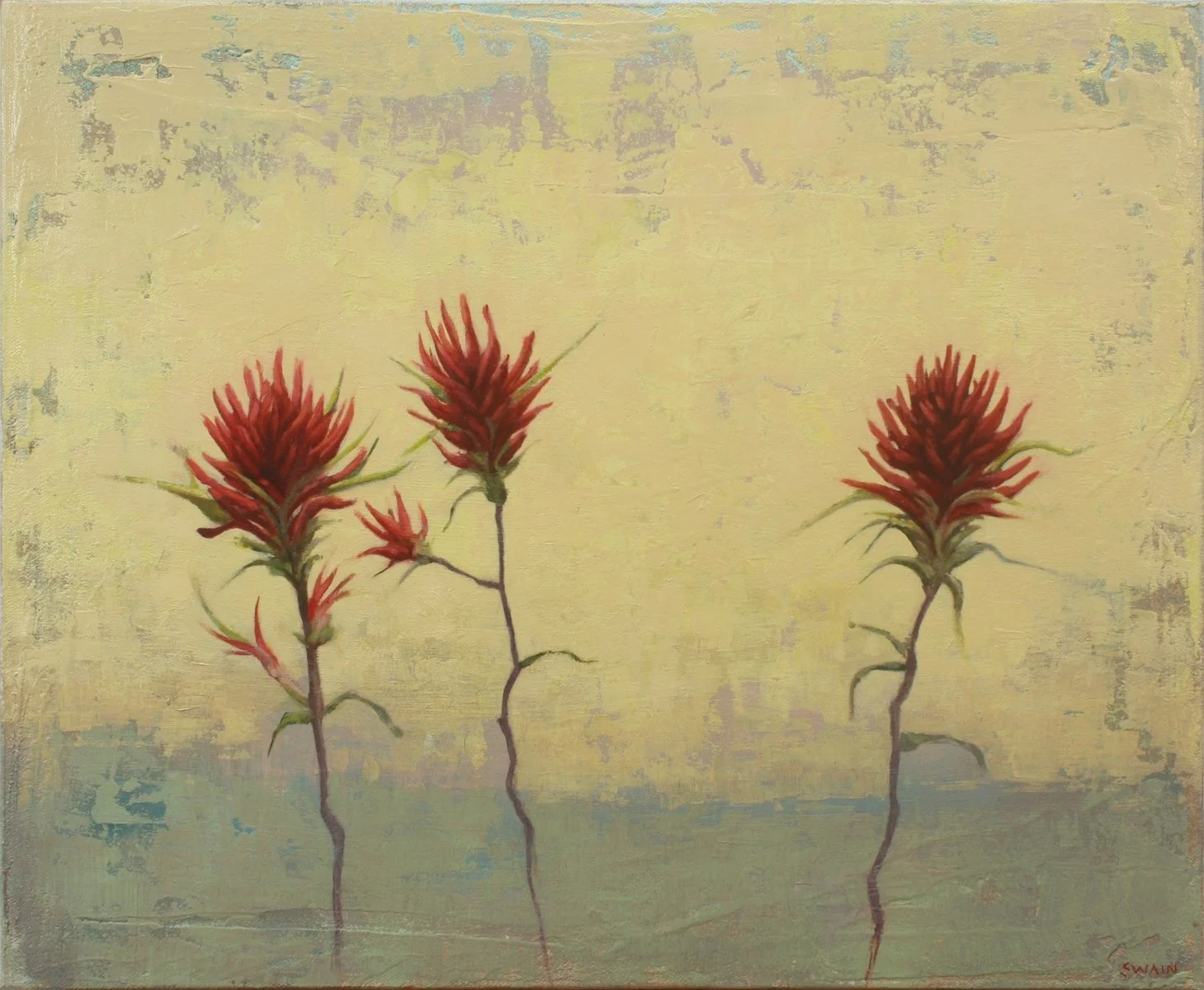
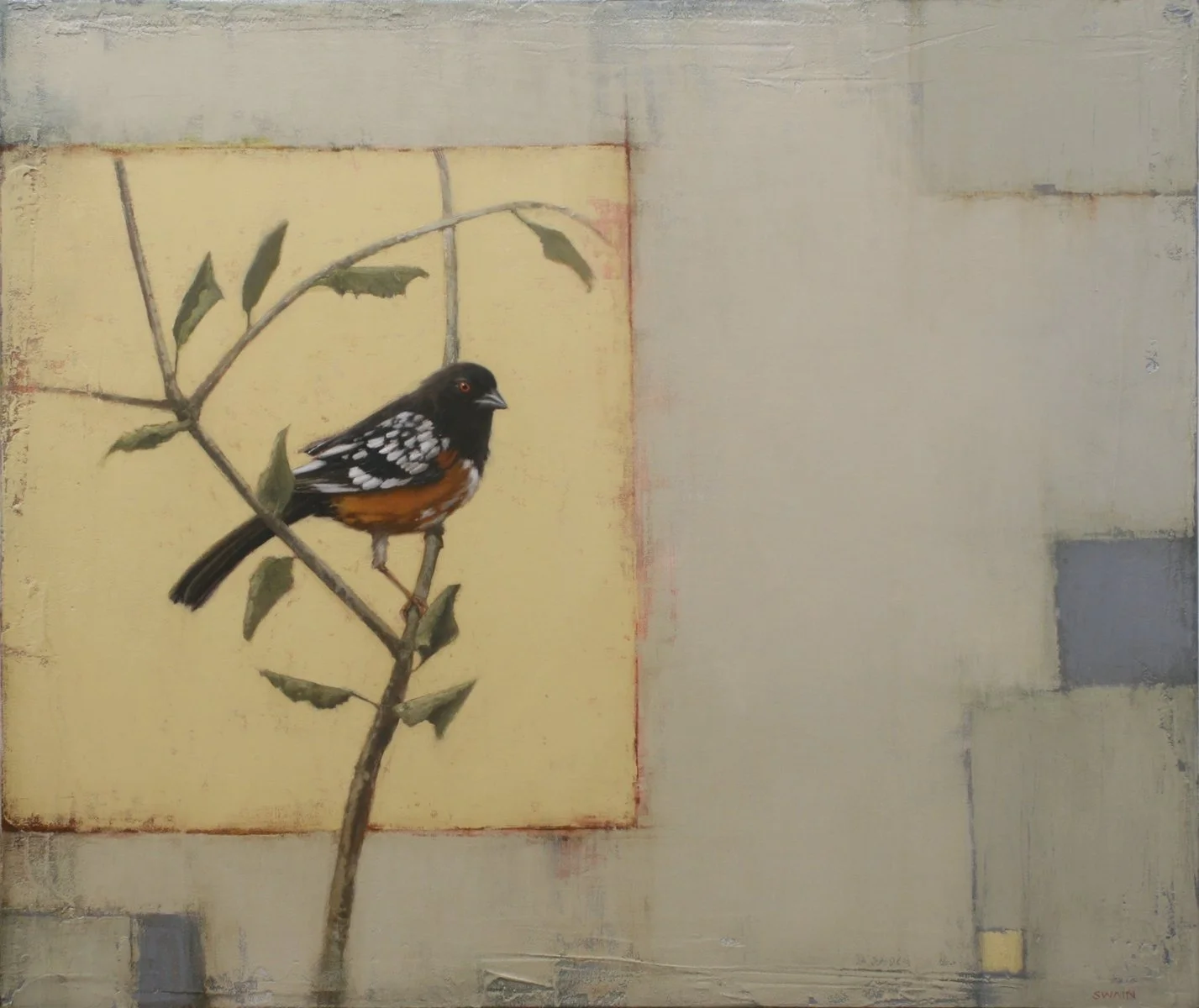
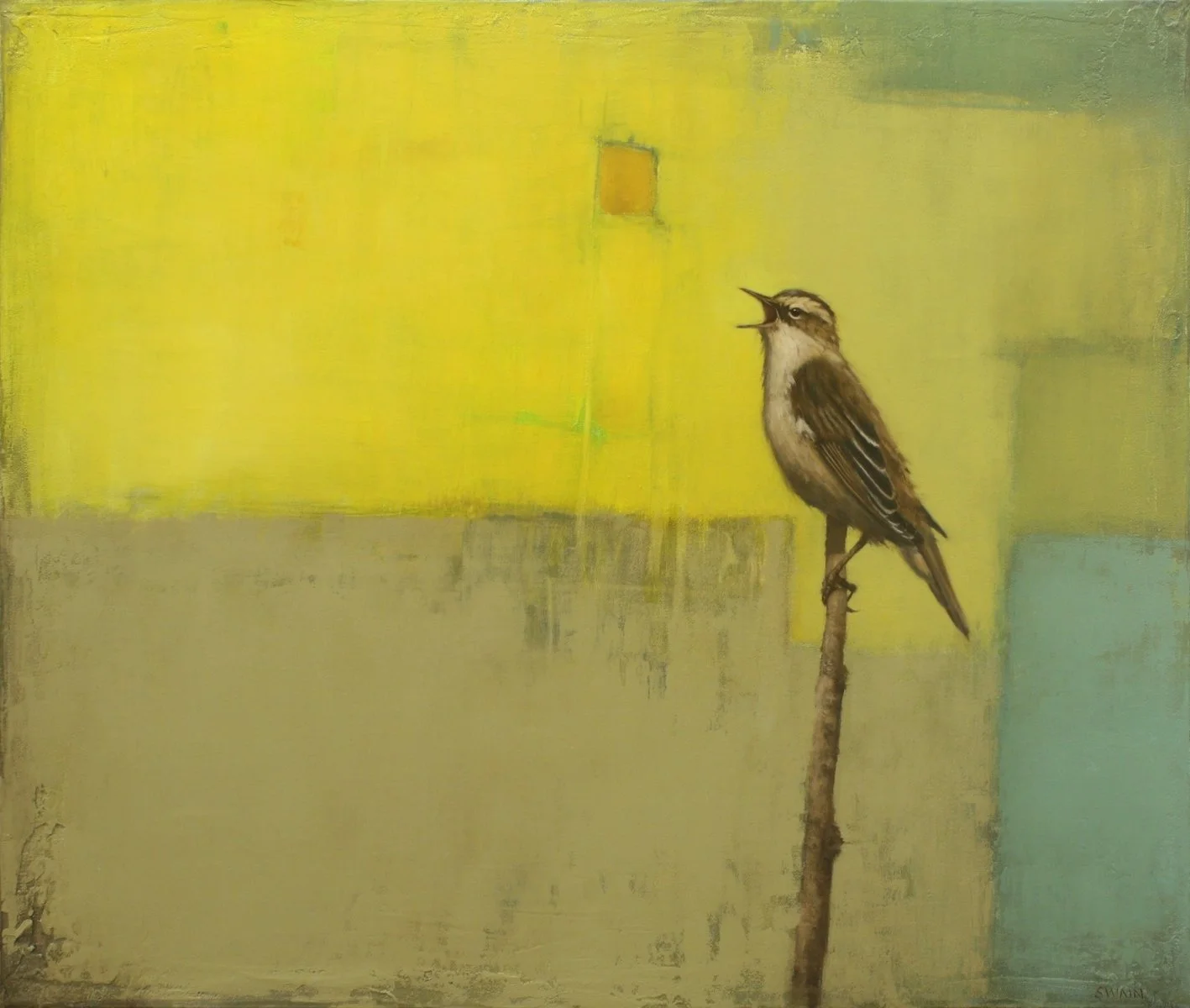
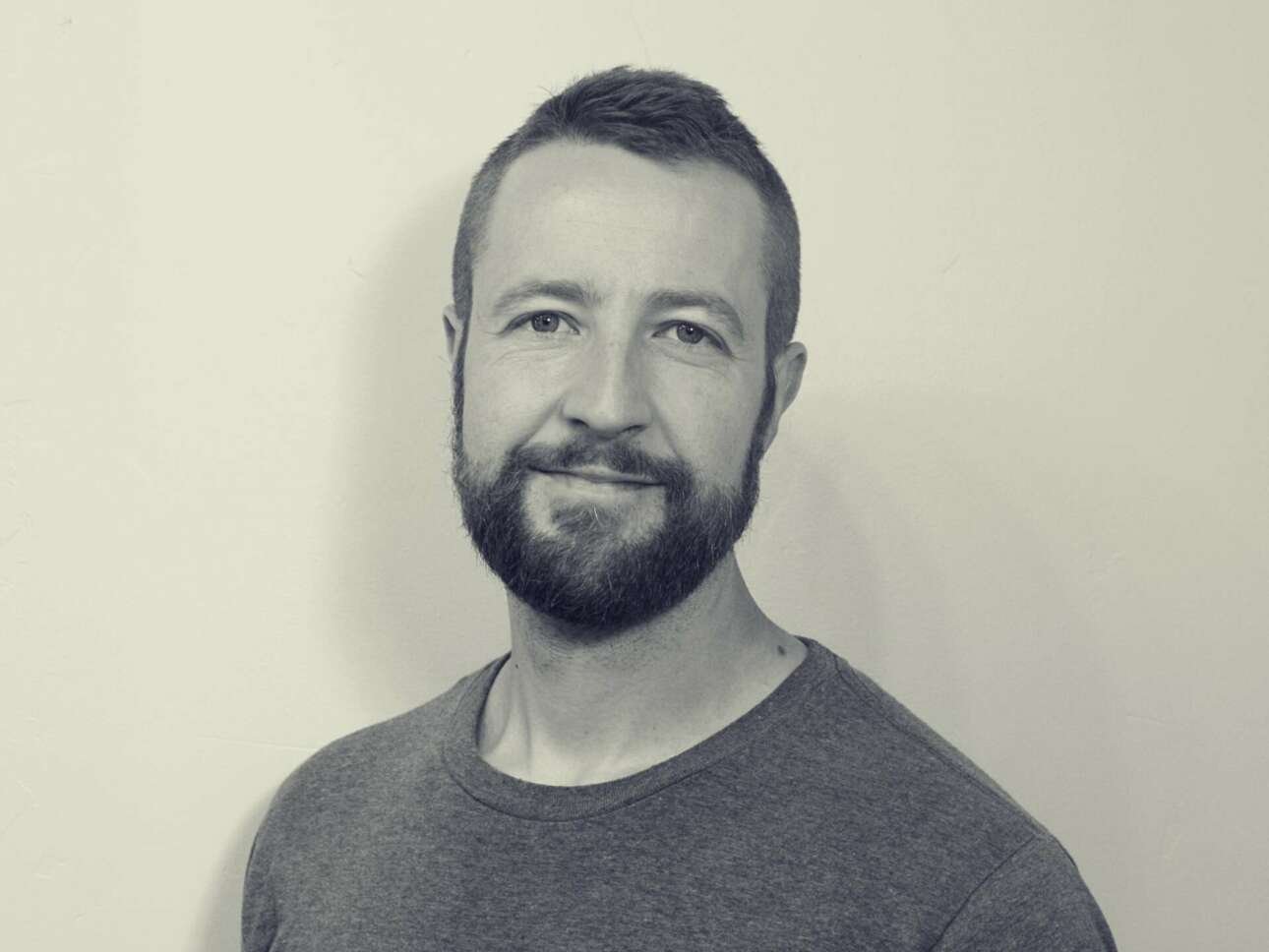
Tyler Swain paints in two languages at once. The subject — a magnolia blossom, a set of antique keys, an iris bud, an insect — is rendered with a patience that borders on devotional. The ground beneath it is the opposite : textured, spontaneous, built from marks that could have gone anywhere. He calls it a balance between chaos and control. He works small, mostly on panels and modest canvases, and the paintings have a way of settling into a wall as though they had always been on it.
He grew up in Orem, Utah, in a valley ringed by mountains, with a mother who kept flower beds and a father who told him that anyone can make a living doing what they love if they are willing to work hard enough at it. His parents put him in private art lessons at eight. He started in still life and widened outward into wildlife — mostly insects and birds — and describes his paintings as little moments, captured and kept the way he wants to remember them. Lately he has been painting Appalachian subjects, dogwood branches and longleaf pine, deliberately choosing things he does not already know how to see.
Swain studied at Snow College and took his BFA in drawing and painting at Utah State University, where he received the George and Marie Eccles Caine Endowment and the Outstanding Senior Award. Southwest Art named him to "21 Under 31: Young Artists to Watch" in 2015 and to "10 Painters to Buy Now" in 2018. He has exhibited across the United States and in Japan, and lives and works in northern Utah.
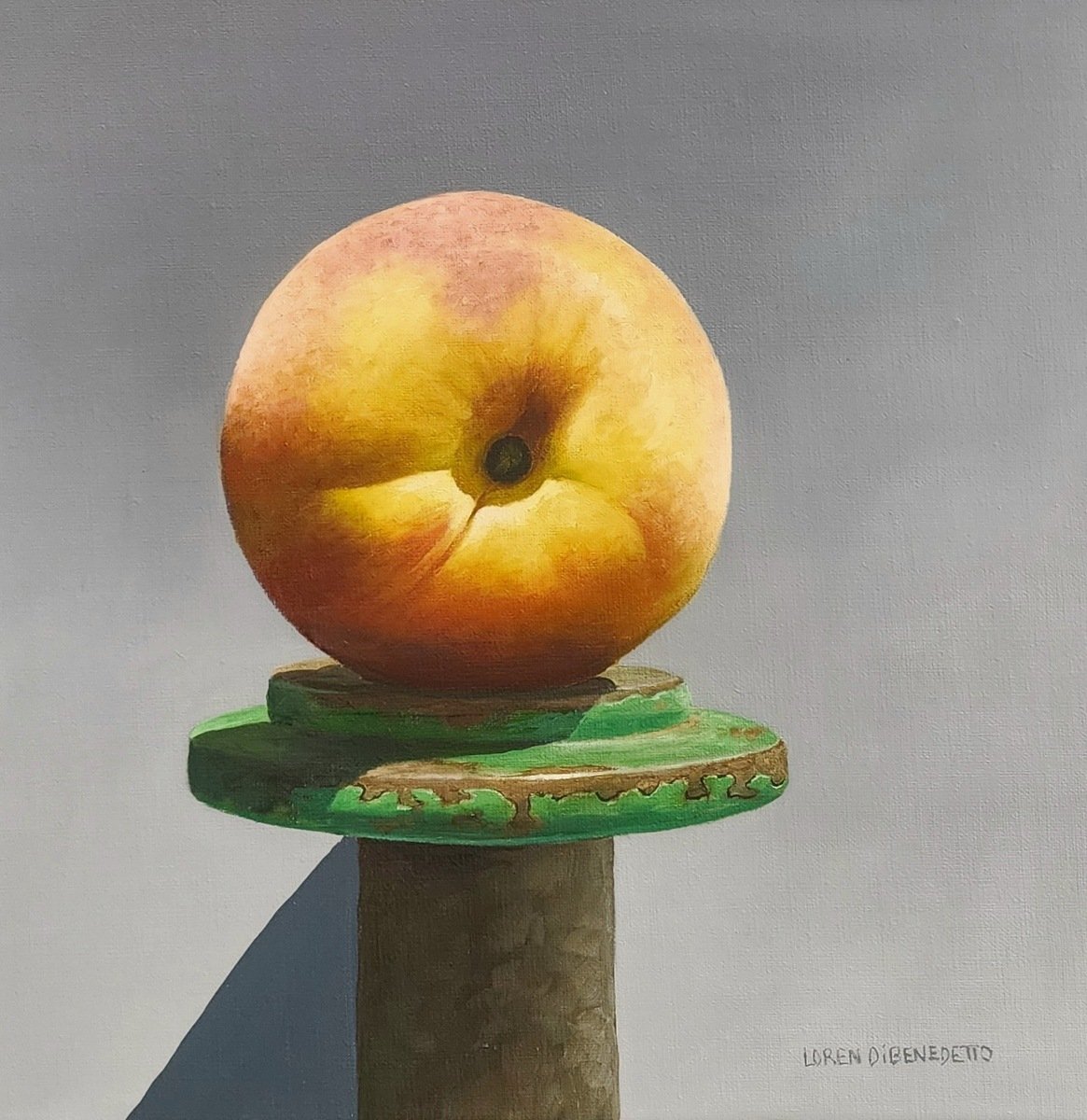
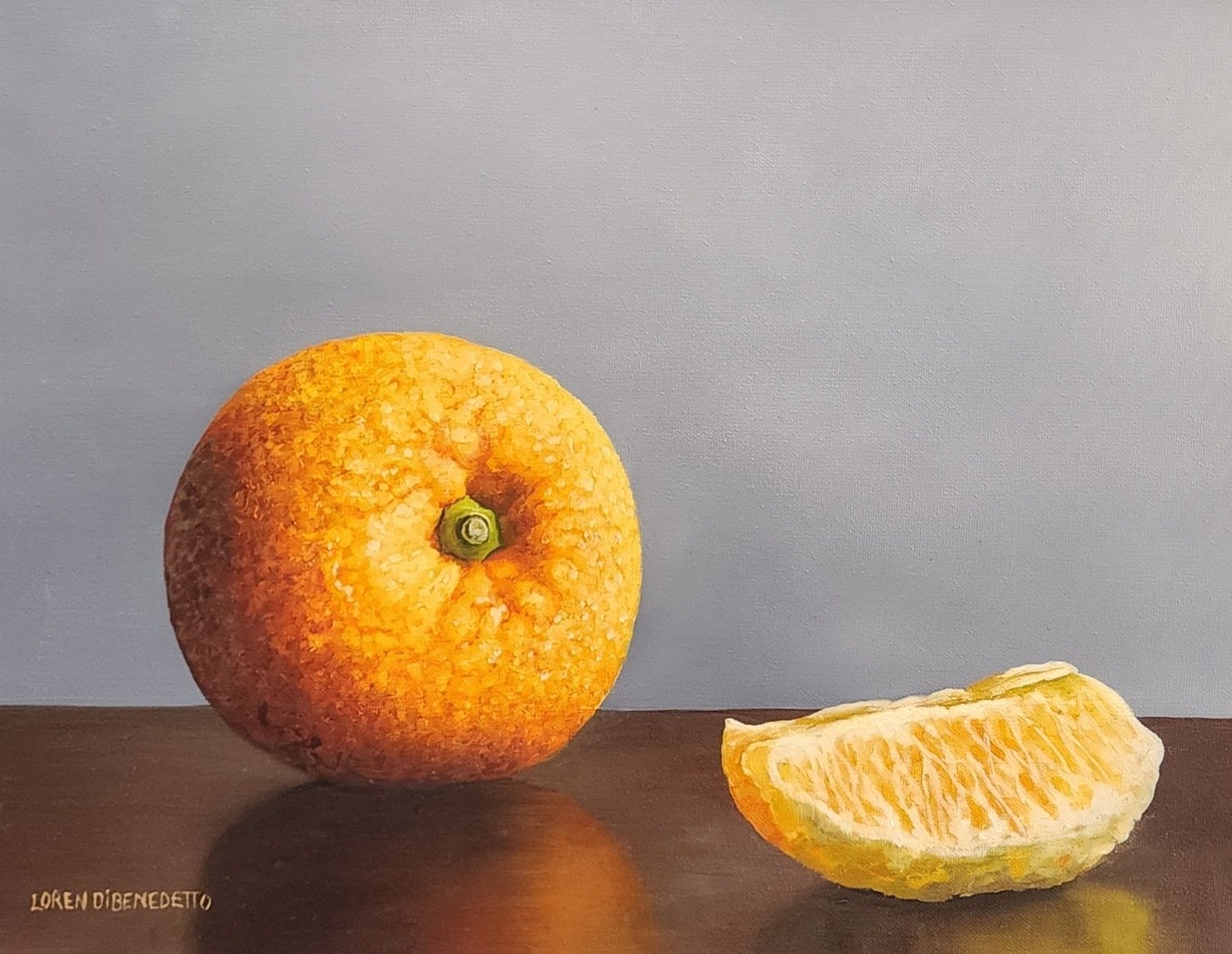
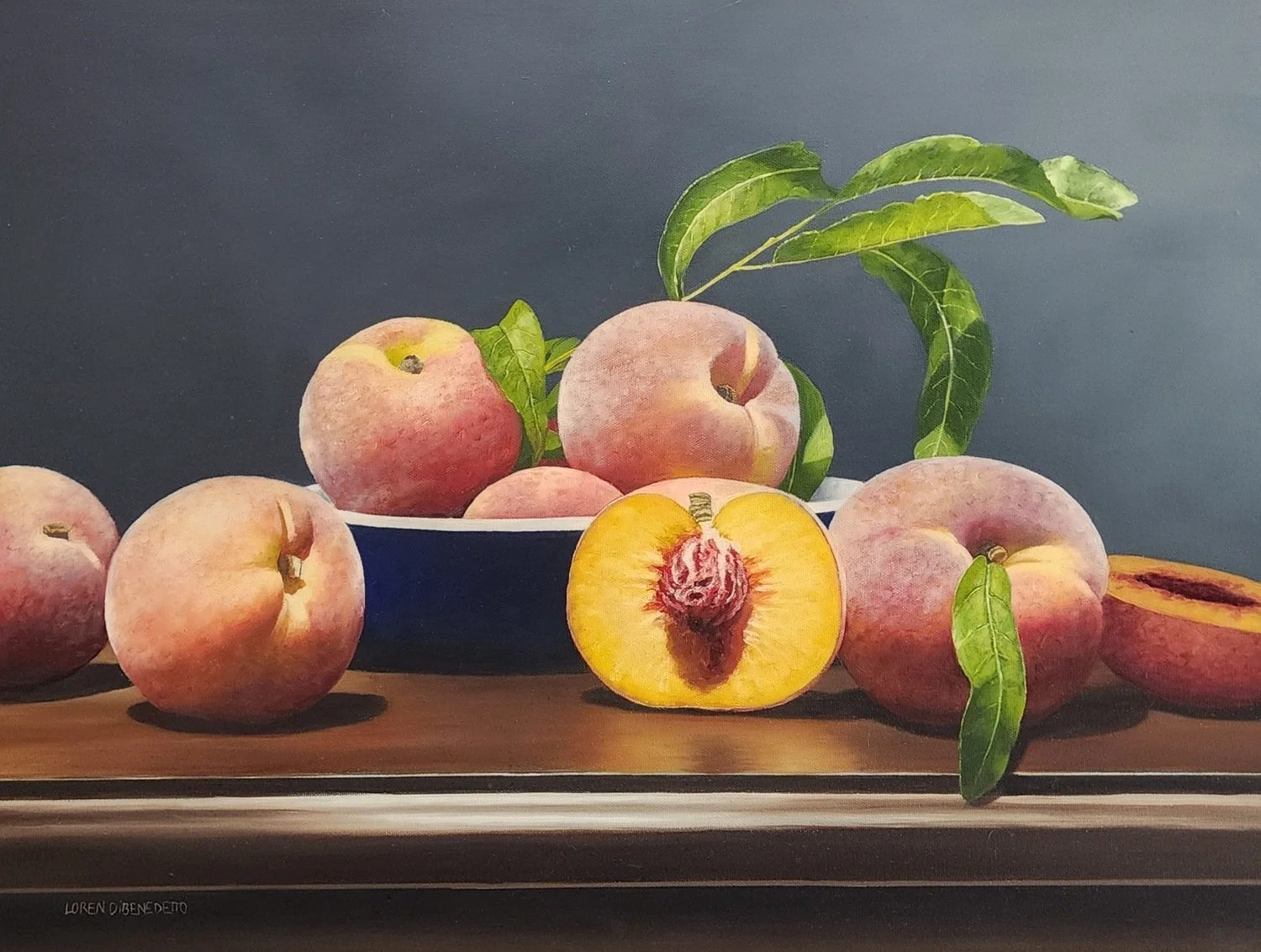
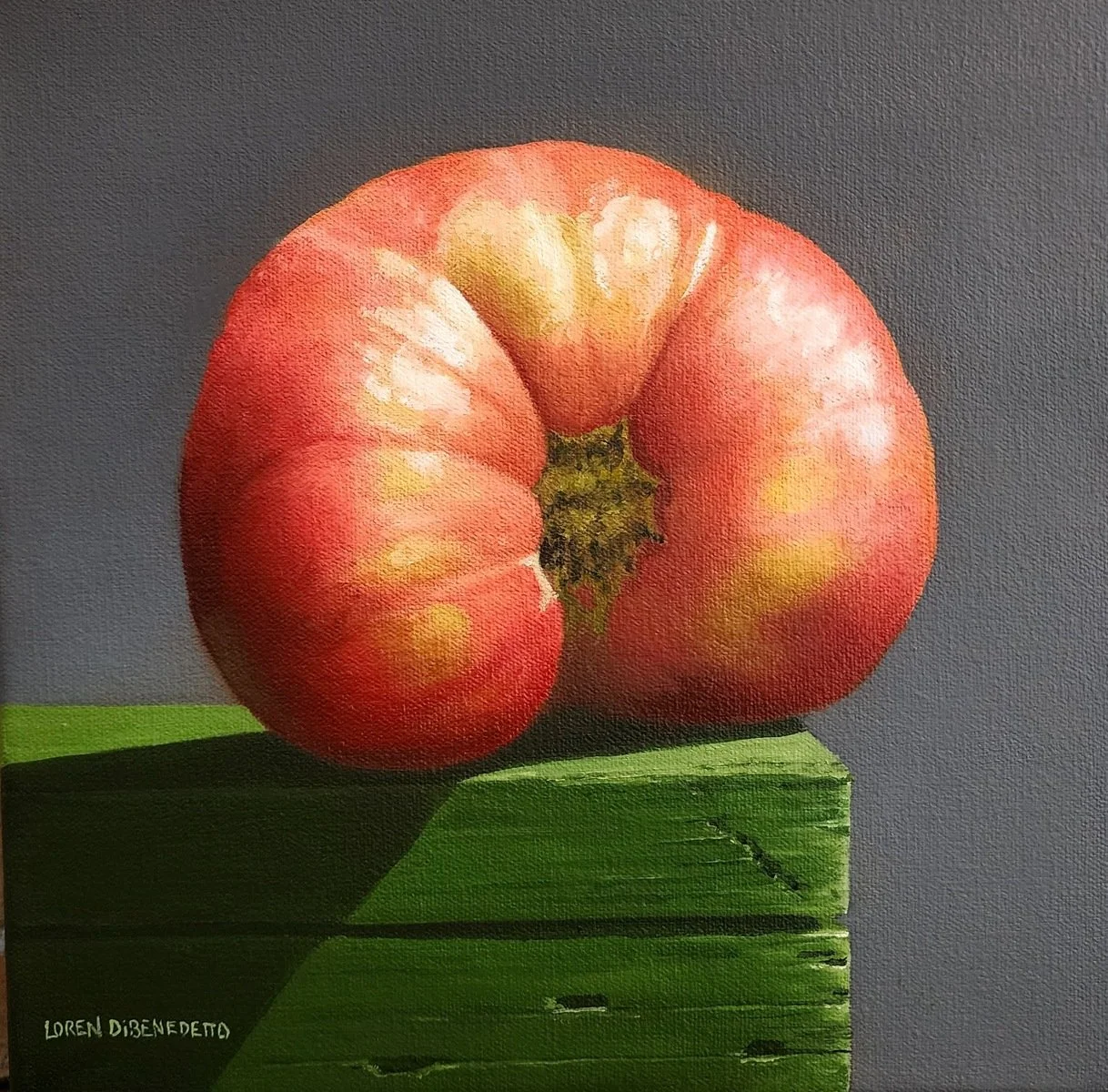
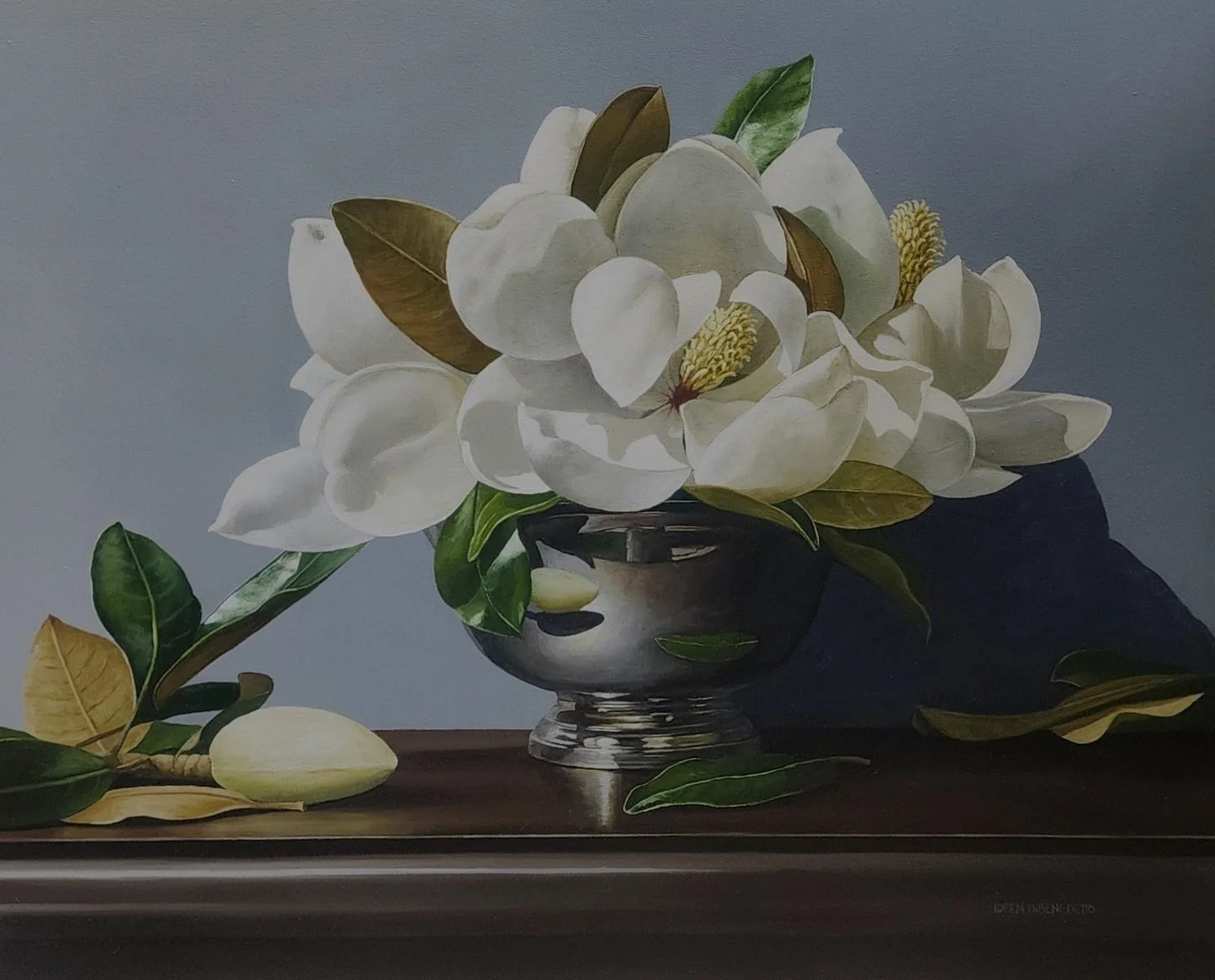
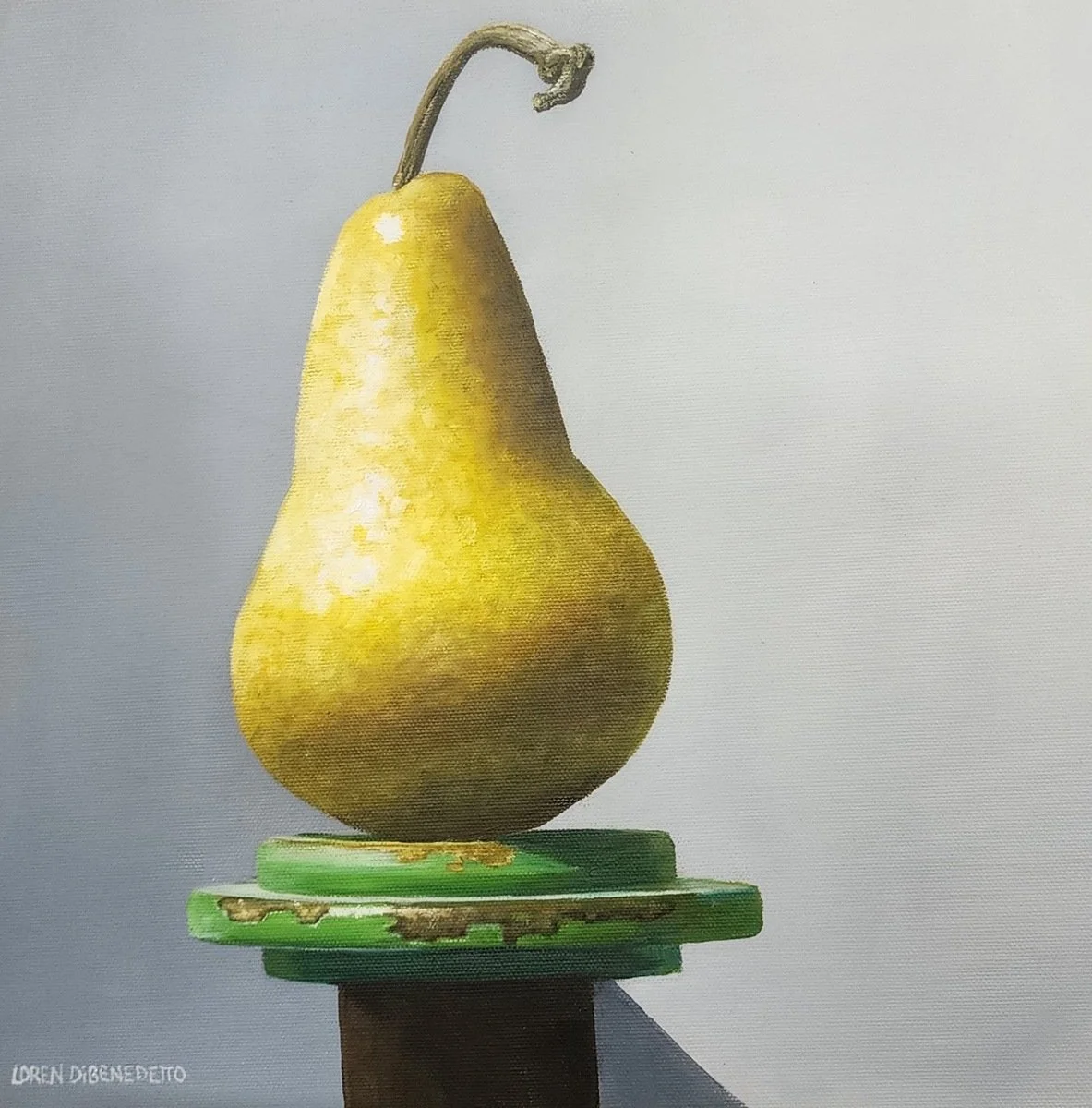
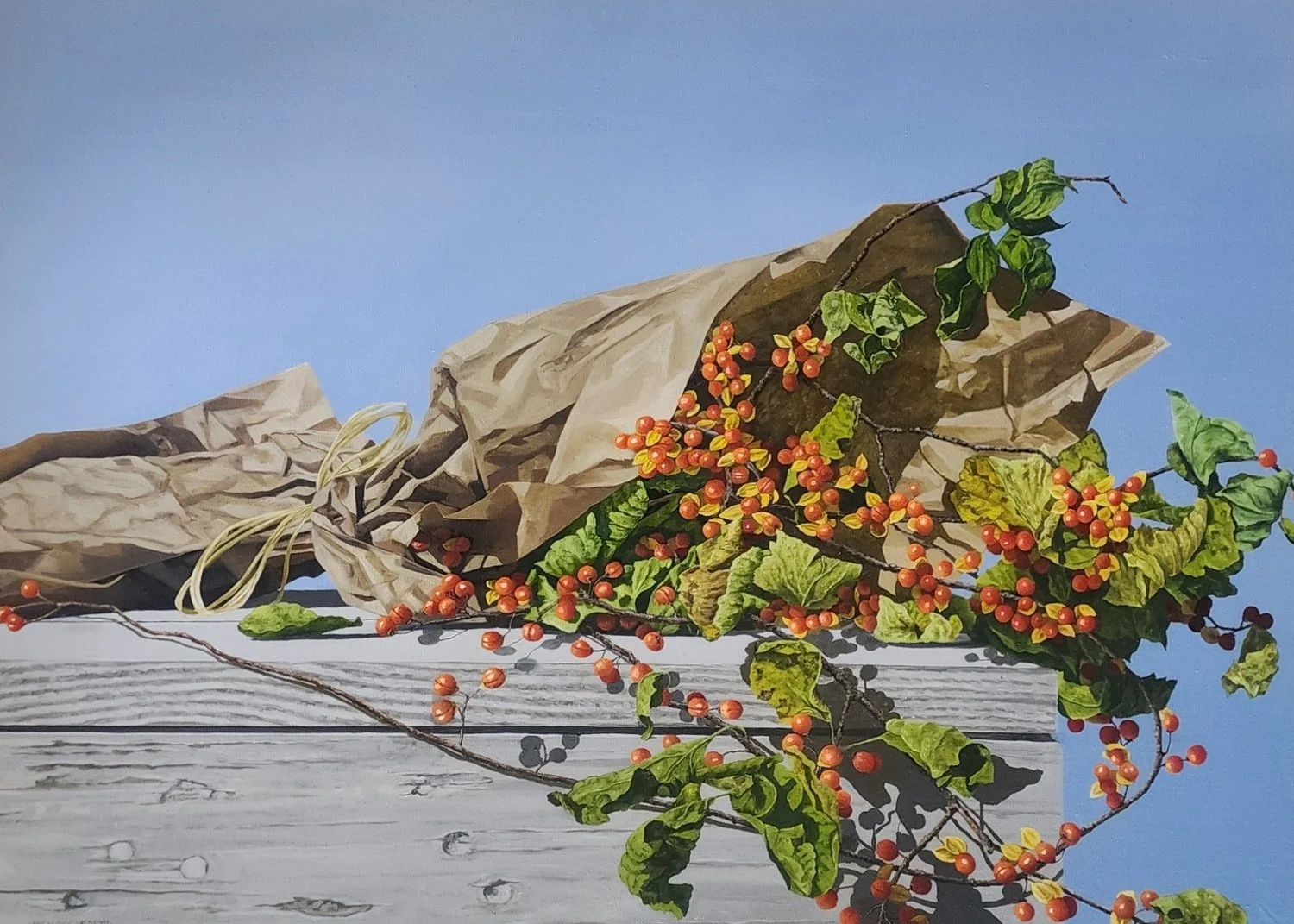
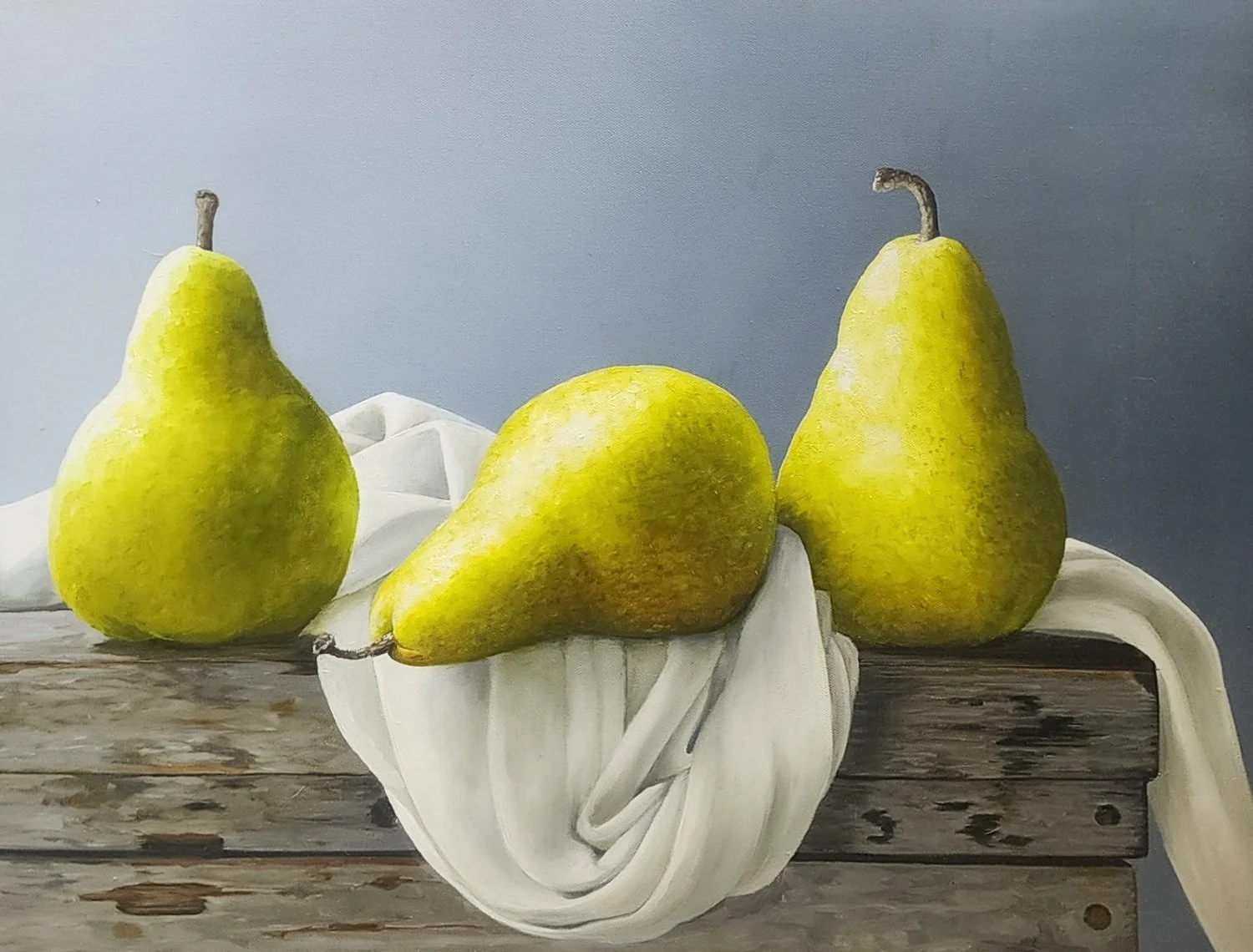
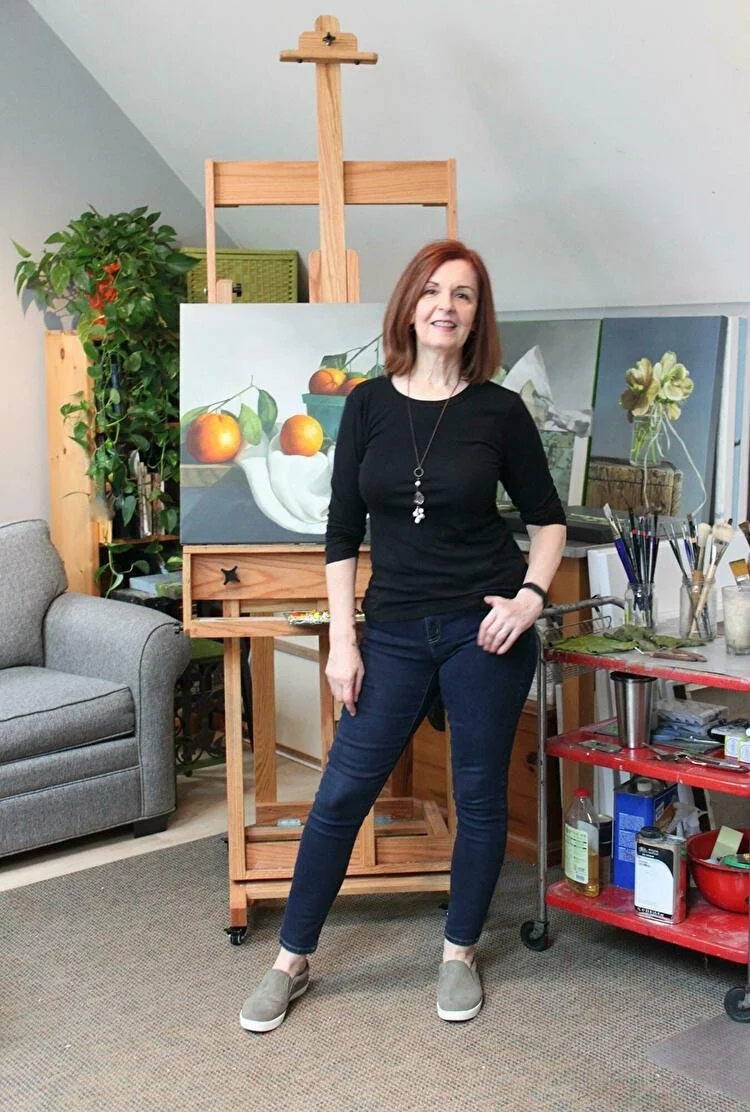
Loren DiBenedetto paints a lemon the way other people paint a portrait. Her still lifes are small assemblies — fruit, a bird's nest, a folded petal, a branch of bittersweet — lit and arranged until an ordinary group of objects starts to feel like it is withholding something. The brushwork loosens as it goes; edges melt, and light does most of the describing. She has said that "life is fleeting, and I want to rest upon a moment and paint it."
She grew up in Carteret, New Jersey, and spent her teenage years working in a family friend's florist shop, building arrangements — which is to say she was composing with flowers years before she ever painted one. Early in her career she struggled with what to paint, until a piece of old advice stuck : paint what you know. She started making large florals and never went back. She lives and works in North Carolina now, and the subjects have followed her south.
DiBenedetto trained at the duCret School of Art in Plainfield, New Jersey, and continued at the National Academy of Fine Arts & Design and the Art Students League of New York, where she studied under David Leffel and Harvey Dinnerstein. She is a member of Oil Painters of America, the International Guild of Realism, the National Oil and Acrylic Painters Society, and American Women Artists, and is regularly juried into their national exhibitions. Her work is held in private and corporate collections across the country. She last showed at the Art Cellar in 2024.
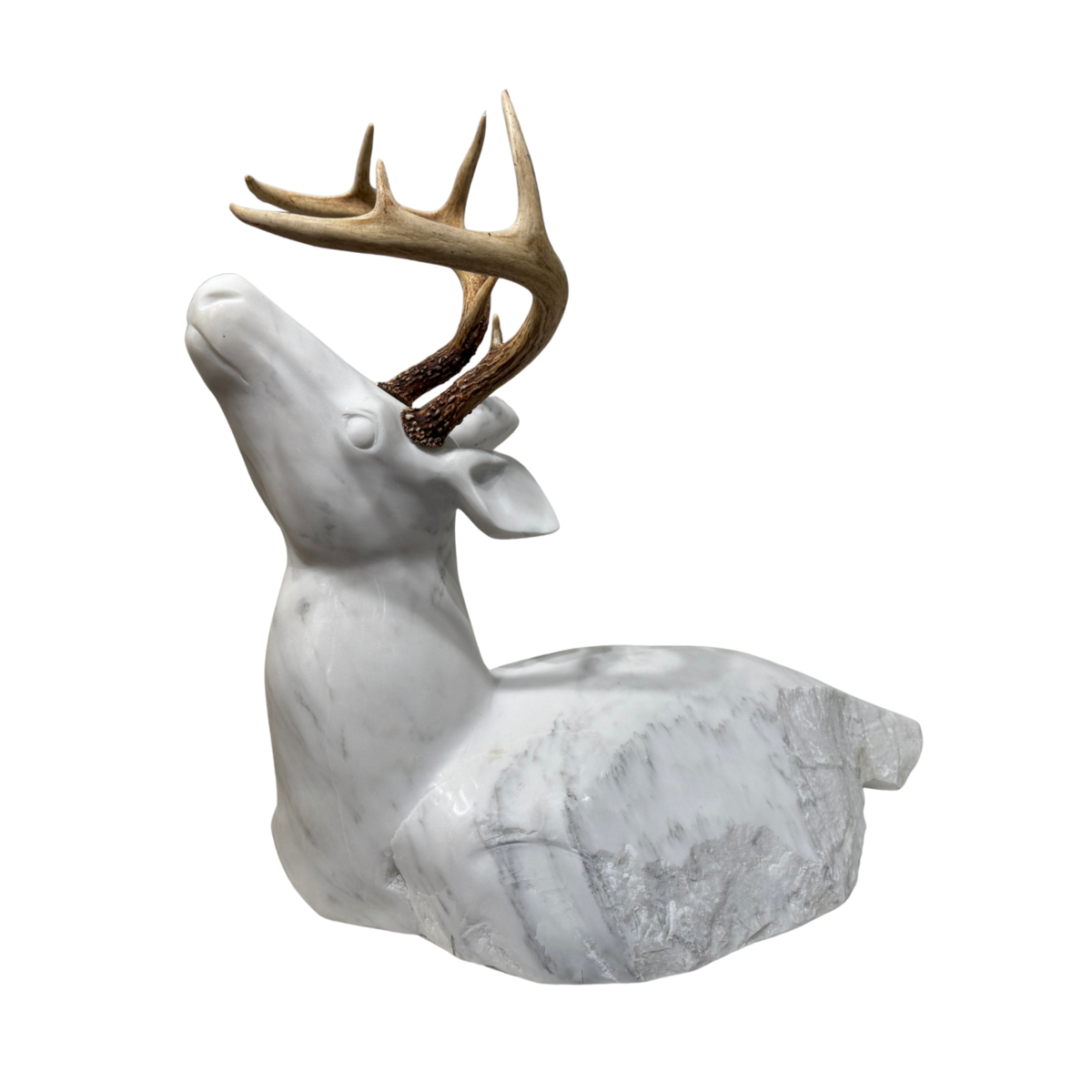
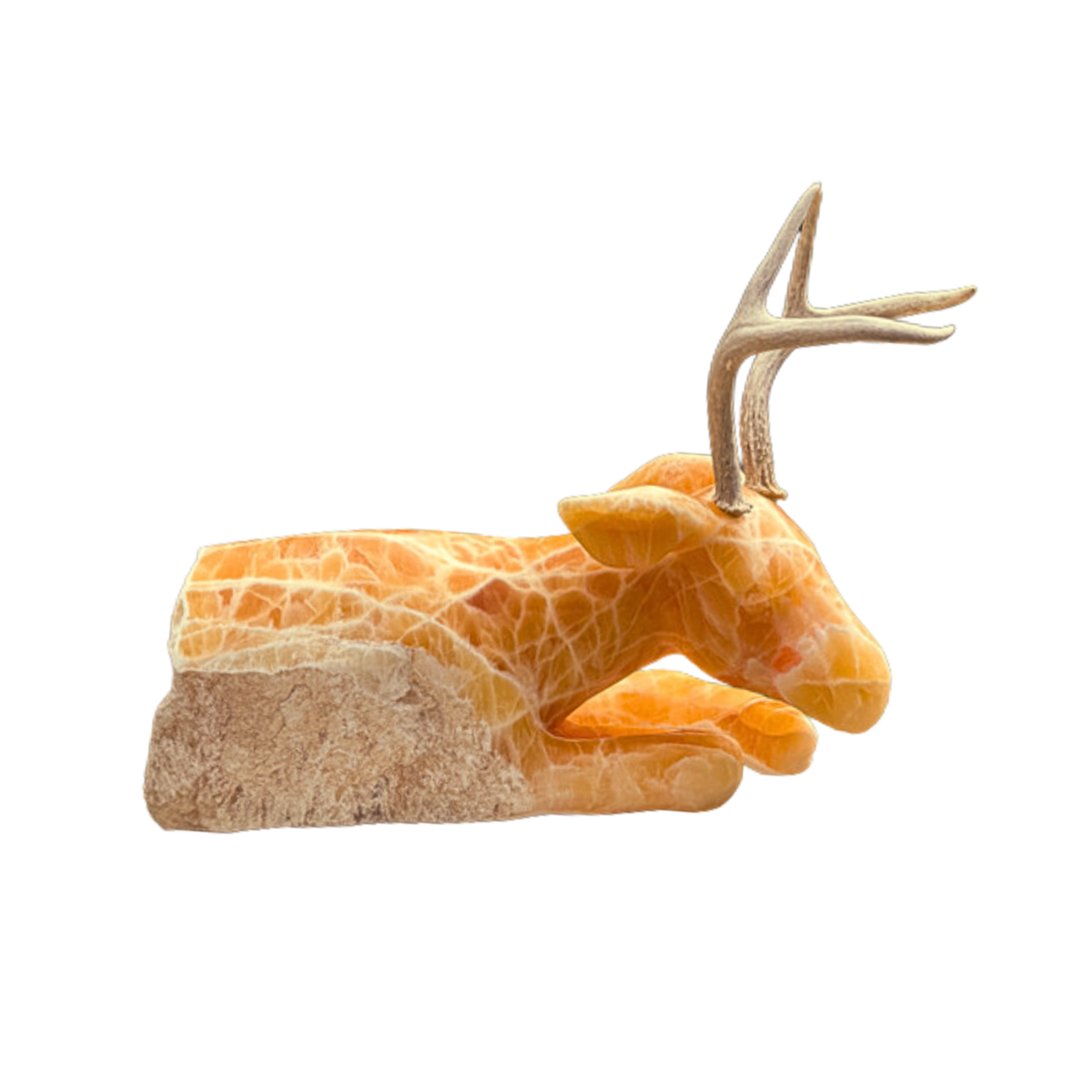
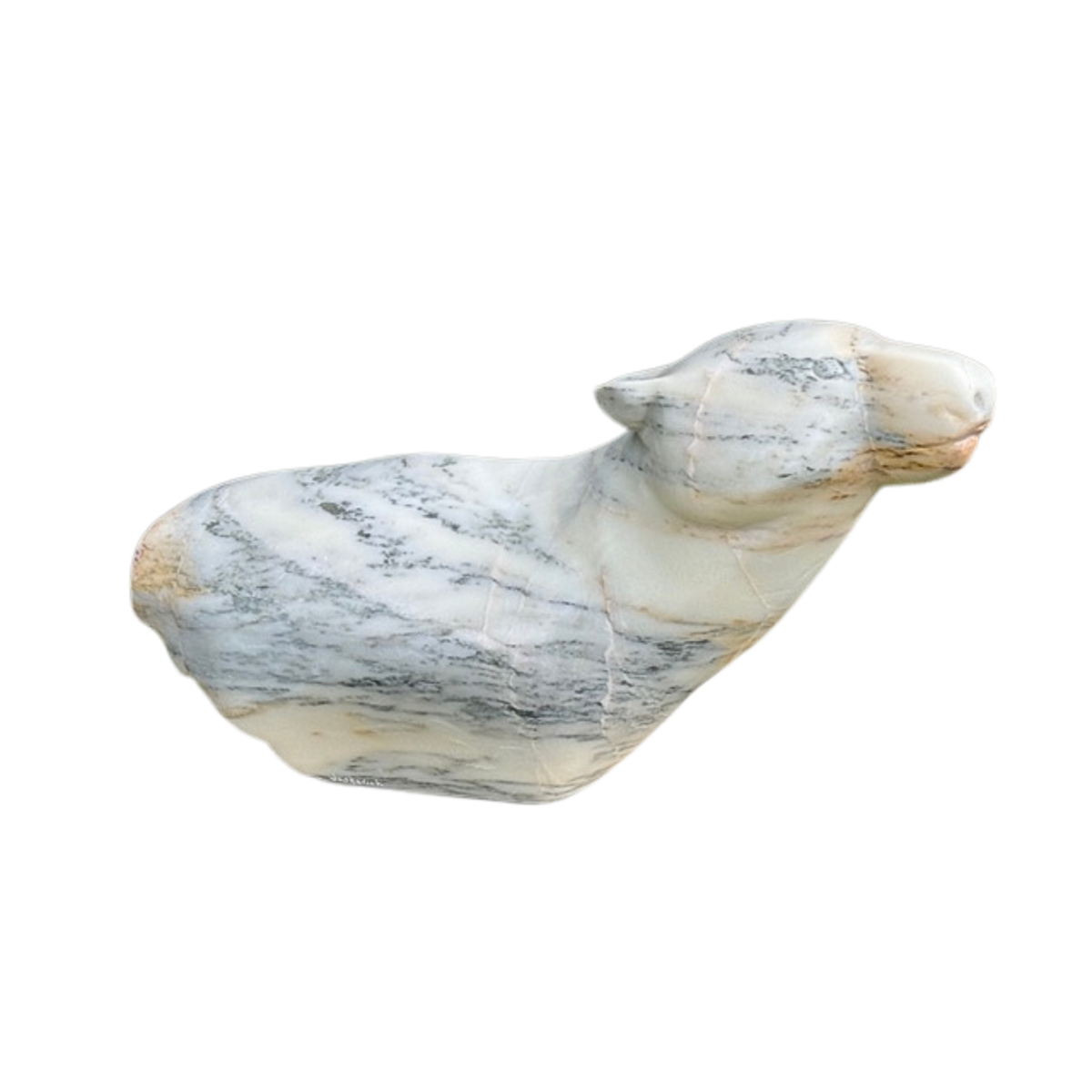
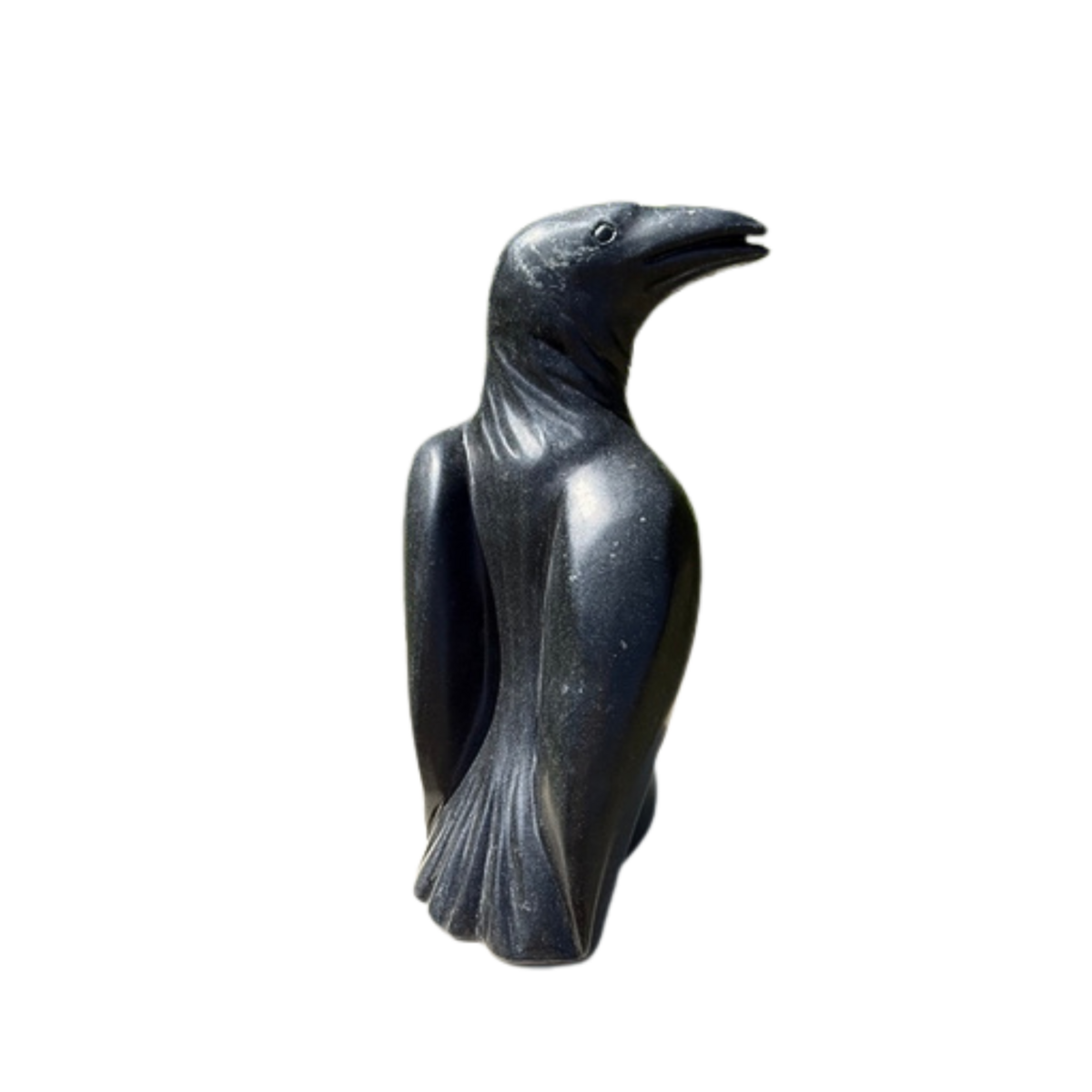
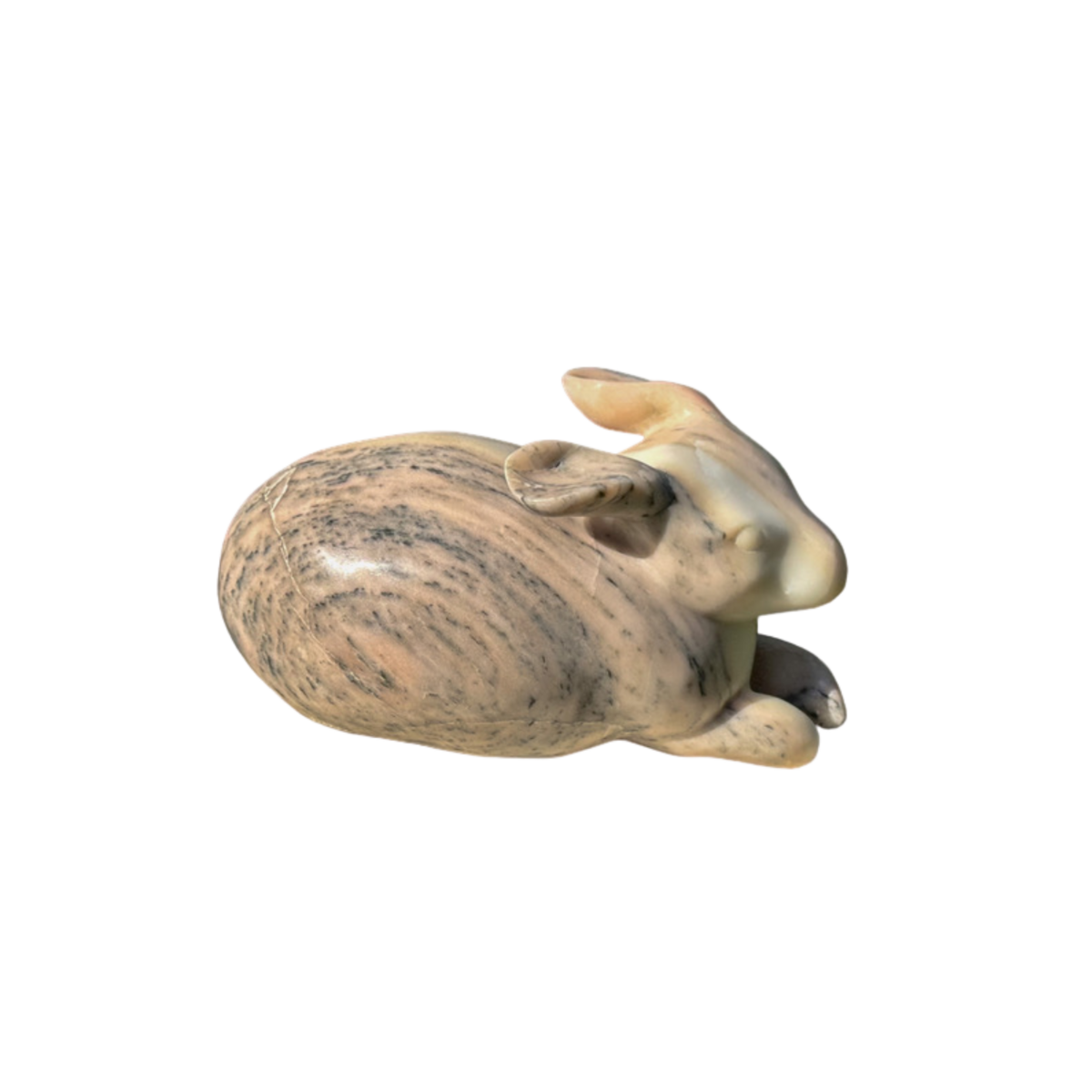
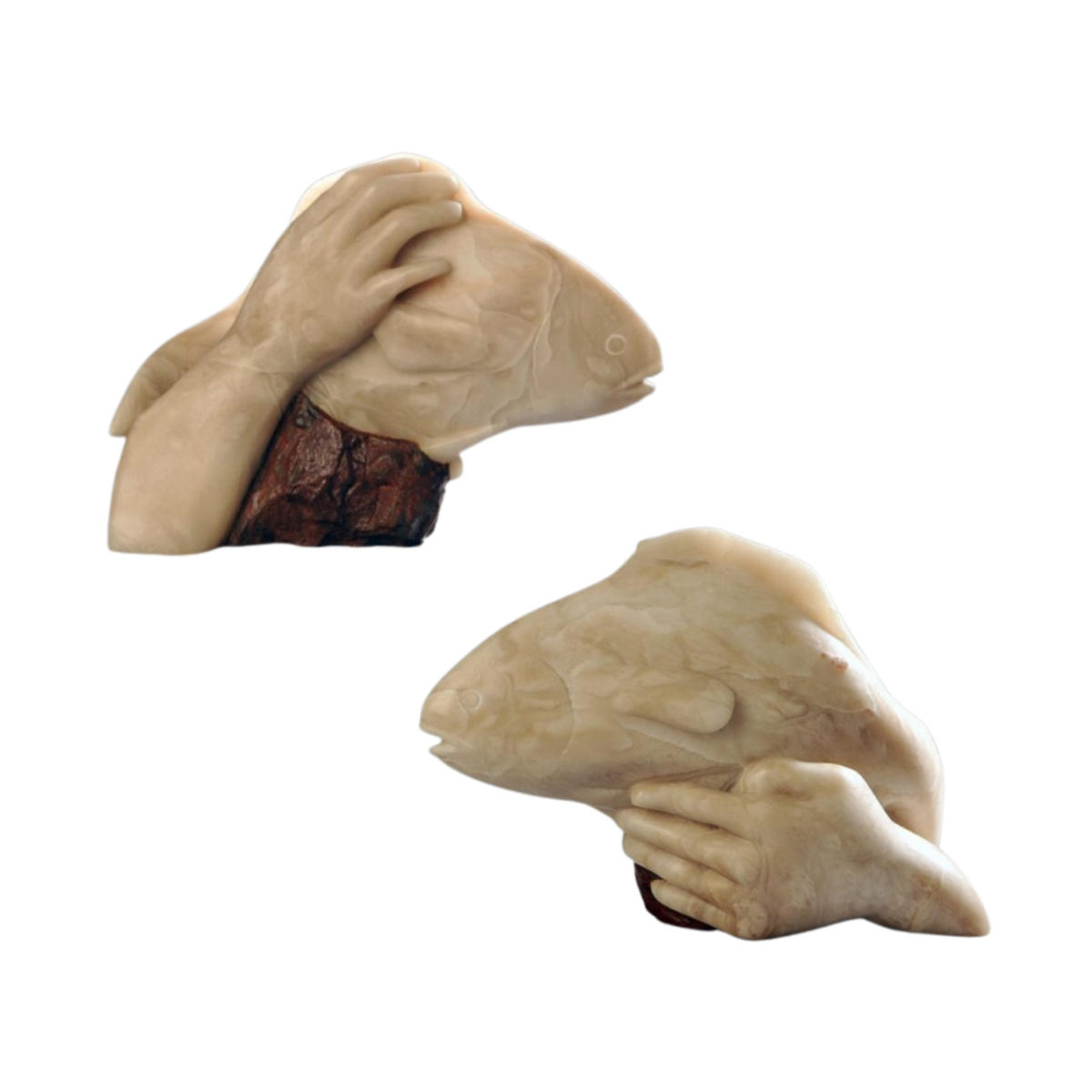
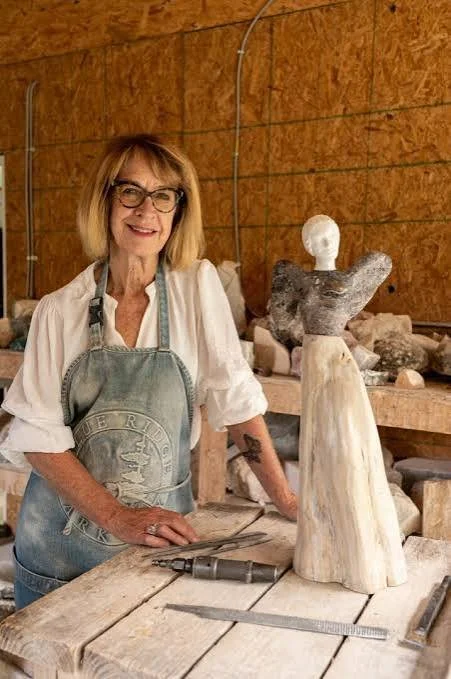
Jane Jaskevich carves without a plan. She draws the figure directly onto the boulder with a big pencil and cuts away what isn't needed, letting the stone dictate the shape of a face or the fall of hair. A torso emerges from one stone; then she goes looking for a second, in a color that argues with the first, to become the head. Cypress that already suggests drapery becomes a robe. A found object becomes a wing. She keeps stone body parts around the studio waiting for the right match, which is precisely what the finished figures look like — assemblies that turned out to be inevitable.
She was born in Greenville, South Carolina, and did not touch stone until graduate school, when a professor at Florida State handed her a piece and told her to try carving it. He admitted later that he had never done that with a student before; he simply knew she wouldn't ruin it. She taught art at the college level for twenty-five years, in Florida and then in Atlanta, with workshops in bronze casting and in marble carving in Italy along the way. In 2020 she moved to two acres in Weaverville and built her studio under the covered deck, where she works within sight of the mountains and her neighbors' chickens, and where nobody complains about the noise or the dust.
Jaskevich holds a BFA from the University of Georgia and a master's in art education from Florida State University, where she began sculpting in 1977. Her work is held in the permanent collections of the Polk Museum of Art, the Albrecht-Kemper Museum of Art, and the Sylacauga Marble Collection, along with corporate collections across the Southeast. She pays open homage to the Greco-Roman roots of stone sculpture — the broken torso, the single figure built from several stones — in work an Atlanta Journal-Constitution reviewer once called dreams in stone.
12 x 12 ″